


Personality Tests
Personality tests delve deeper into the specific traits and attributes of a person's personality. They can give insights into how a person will interact and behave in certain situations as well as profile their general likes, dislikes, and responses.
While these personality tests aren't typically designed to test whether an individual is a good match for a particular job or career, there are hybrid career assessment tests.
Some personality tests integrate images of a person or a setting and ask you to choose which one is most appealing.
History of Personality Tests
Personality tests have a long and varied history, dating back to ancient Greece, where philosophers such as Hippocrates and Aristotle made observations about the differences in human character and behavior.
One of the earliest attempts to uncover a person's character was by examining the bumps on their head. This process was called phrenology, and personality tests have come a long way since their inception. This practice is widely discredited and not considered a valid personality assessment method.
For centuries, people have been trying to assess others' personalities through different types of tests.
In the late 19th and early 20th centuries, psychology emerged as a scientific discipline, and several theories about human personality were developed. The first systematic personality tests were created during this time, including the Woodworth Personal Data Sheet (1919) and the Minnesota Multiphasic Personality Inventory (1940).
The latter part of the 20th century saw a proliferation of personality tests, with many new instruments being developed for both clinical and non-clinical purposes. These tests ranged from simple, self-administered questionnaires to complex, projective tests requiring trained administrators.
Personality testing was first taken seriously by the United States Army during World War I. Soldiers were tested in an attempt to determine who would be most likely to suffer the effects of shell shock based on their individual dispositions. There were ethical concerns surrounding this, and since then, personality testing has grown into being used by educational facilities and human resource departments worldwide.
Today, personality tests are widely used in a variety of settings, including clinical psychology, personnel selection and development, and market research. While there is still debate among psychologists about the validity and reliability of some personality tests, they continue to be popular and influential tools for understanding human personality and behavior.
Types of Personality Tests
There are numerous different personality tests used today. While they all use slightly different methods to classify respondents, they are similar in test and question format.
Some of the most popular tests include:
The Enneagram Personality Test
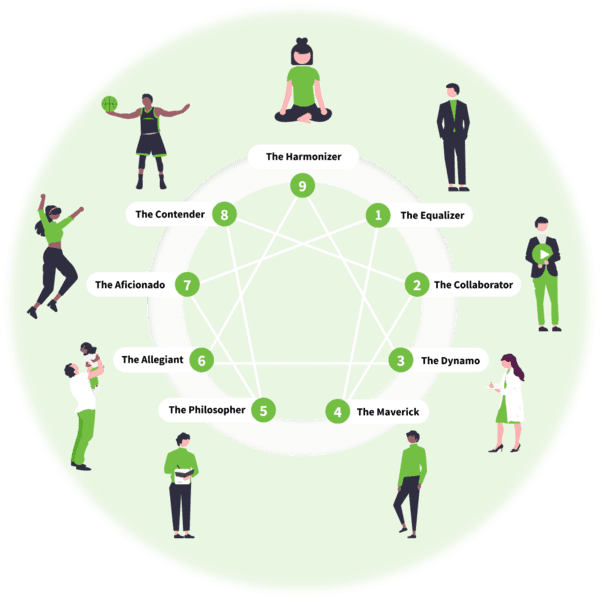
The Enneagram test is a personality assessment — there are no wrong answers. It divides all human personalities into nine types. Each type has similar characteristics to neighboring types, referred to as wings.
The Enneagram was designed to provide insights into personal growth, self-reflection, and how we relate to others. The best, reliable enneagram tests are validated by experts and generate comprehensive results presented with clarity. We cover comprehensive details about the Enneagram test, including its history, purpose, terminology, Enneagram wings, nine personality types, how to find the best Enneagram test, and frequently asked questions.
The Five-Factor Model (Big 5)
Also known as "The Big 5," academics consider this one of the most accurate personality tests. It groups respondents into five major categories recognized as key personality characteristics across cultures worldwide: openness to experience, conscientiousness, extroversion, agreeableness, and neuroticism.
Ernest Types and Raymond Christal first began researching this test in the 1960s; however, it wasn't until the 1990s that Lewis Goldberg redesigned the model, creating "The Big 5." The Five-Factor Model has been widely used across different workplaces during the hiring process. Studies have shown that many people working in the same industry or role often share prominent personality characteristics.
The CareerFitter

This career assessment test is primarily a hybrid personality and career test that evaluates your personality specifically in a work environment. CareerFitter uses the expression "work personality" to differentiate a person's personality when working versus not working.
This career assessment asks questions about how you would respond to situations specific to a work setting. During the assessment, test takers can see in real time how their answers affect results. The test has built-in superfluidity, so examinees don't need to be concerned with any answer they weren't 100% confident about. Answers are non-bias — there are no wrong answers — and therefore this career test should be considered more of an assessment or evaluation.
The science behind CareerFitter was developed using psychological research and data that determines your work personality profile, uncovers strengths and weaknesses, management styles, work environment preferences, and suggests careers and jobs that best fit the examinee.
It's noteworthy that they've been around for over 25 years and are arguably one of the best career tests available, combining a work personality assessment with their aptitude aversion assessment — accessible exclusively to paid users.
It is most often used by people looking to change careers who need career direction, college students, career coaches, and HR departments.
Compare CareerFitter to Other Career Tests
16 Personalities Test
The 16 Personalities use a testing method based on the Myers-Briggs assessment. Through a series of questions, respondents are grouped into one of four overarching categories: Analysts, Diplomats, Sentinels, or Explorers.
These four categories are then broken down into four subcategories that accurately describe a person's primary personality traits.
These subcategories include:
Myers-Briggs Test
The original Myers-Briggs Test is considered by many to be one of the founding personality tests that rose to popularity in the 1900s. In 1917, Katharine Briggs became intrigued by personality types when her daughter chose an unlikely match for her fiance. She wanted to find out more about human characteristics and what caused people to have different personality traits.
Both Katharine and her daughter worked together for the next 20 years. They relied heavily on Dr. Carl Jung's research and together created the Myers-Briggs Personality Test.
This test aims to determine how respondents see the world around them. It breaks personalities into four categories: introversion or extraversion, sensing or intuition, thinking or feeling, and judging or perceiving. A personality profile is determined based on where each person falls within each category.
The Winslow Personality Profile
This test was designed to help organizations and HR departments measure an employee's suitability for specific positions. It looks at a person's personality, behavior, and attitudes in their existing work environment.
Once the Winslow Personality Profile Test is completed, a report is generated to assess the respondent's results. This detailed report can show how compatible a person would be in a specific work environment, which traits have the most profound influence on overall work ethics, and which areas a person may need to improve upon to become a better employee.
This is often used to help organizations determine fit for various departments or positions, or in consideration of promotion to another role.
Process Communication Profile
NASA initially developed this test to determine the underlying personality traits of its astronauts — whether they were suitable for the job, how they would perform under stress, what their preferred communication style was, and how well they would interact with others.
This test divides respondents into six different personality categories.
These are:
- Harmonizers
- Thinkers
- Rebels
- Imagineers
- Persisters
- Promoters
The Process Communication Profile test aims to show where a person's area of most significant strength lies.
The Holtzman Inkblot Technique
While not commonly used today, The Holtzman Inkblot Technique was at one time extremely popular. Walter H. Holtzman developed this test in 1961, using abstract inkblot images to determine a person's personality.
During the trial, forty-five different images are presented and respondents must identify what they see.
Example of inkblots:
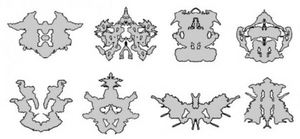
There are twenty-two different criteria that respondents are scored on, including reaction time, rejection, location, space, form definiteness, form appropriateness, color, shading, movement, pathognomonic verbalization, integration, content (human, animal, anatomy, sexual, or abstract), anxiety, hostility, barrier, penetration, balance, and popularity.
This test is used primarily in subjects who have suffered head trauma, depression, or schizophrenia.
DISC Assessment
William Marston and Walter Clarke first developed the DISC Assessment test. These psychologists designed a test to look into the strong behavioral traits of dominance, inducement, submission, and compliance.
This personality test can be very valuable in the workplace as it gauges how a person will react to specific rules, environments, and management styles. It can determine how well a potential candidate will fit into a particular role.
Advantages of Personality Tests
There are numerous advantages of taking a personality test, especially regarding hiring a new employee or assessing a current employee's habits in the workplace.
Some of the most enormous benefits of using personality tests include:
- Speeds up recruitment — Allowing candidates to complete a personality test gives you a clear picture of who they are without lengthy hiring and interviewing processes.
- Deeper understanding — A personality test gives you a better understanding of a candidate's likes, dislikes, strengths, and weaknesses that may not surface in a standard interview.
- Identify poor fits quickly — You are better able to identify those with personality traits that don't align with your corporate culture or environment.
- Cost-effective — Personality tests are relatively simple to complete and can save a company significant time and money compared to other interviewing techniques.
 Disadvantages of Personality Tests
While personality tests can be highly beneficial, they do come with their downfalls as well. Some of the most significant disadvantages to personality tests include:
- Social desirability bias — Individuals may respond in ways they believe are most socially acceptable rather than accurately reflecting their true thoughts and behaviors.
- Limited self-awareness — If an individual lacks insight into their own thoughts, feelings, and behaviors, they may struggle to answer questions accurately.
- Test anxiety — Stress and anxiety during testing may cause an otherwise excellent respondent to finish with poor results.
- Cultural gaps — Some tests may not account for cultural differences, meaning people from different backgrounds may not be accurately represented.
- Incomplete picture — No test can capture the entirety of an individual's personality. Results should be interpreted with appropriate context and considered part of a broader assessment.
Personality Tests in the Workplace
While personality tests won't indicate which career or job type an individual is best suited to, they can provide some help during the interviewing process. Finding out more about a candidate's driving personality traits can determine how well a person will fit into the workplace environment.
These personality assessments can offer some value; however, a career test can give a hiring manager a better overview of a specific candidate's potential and provide a job seeker with more informed insight into which career path is best to pursue.
Take the Career Test